PUBLISHED IN DEPARTURES
Valencia
In town for the World’s 50 Best Restaurants awards, editor Sophie Mancini tastes her way through the briny soul of this coastal Spanish city.
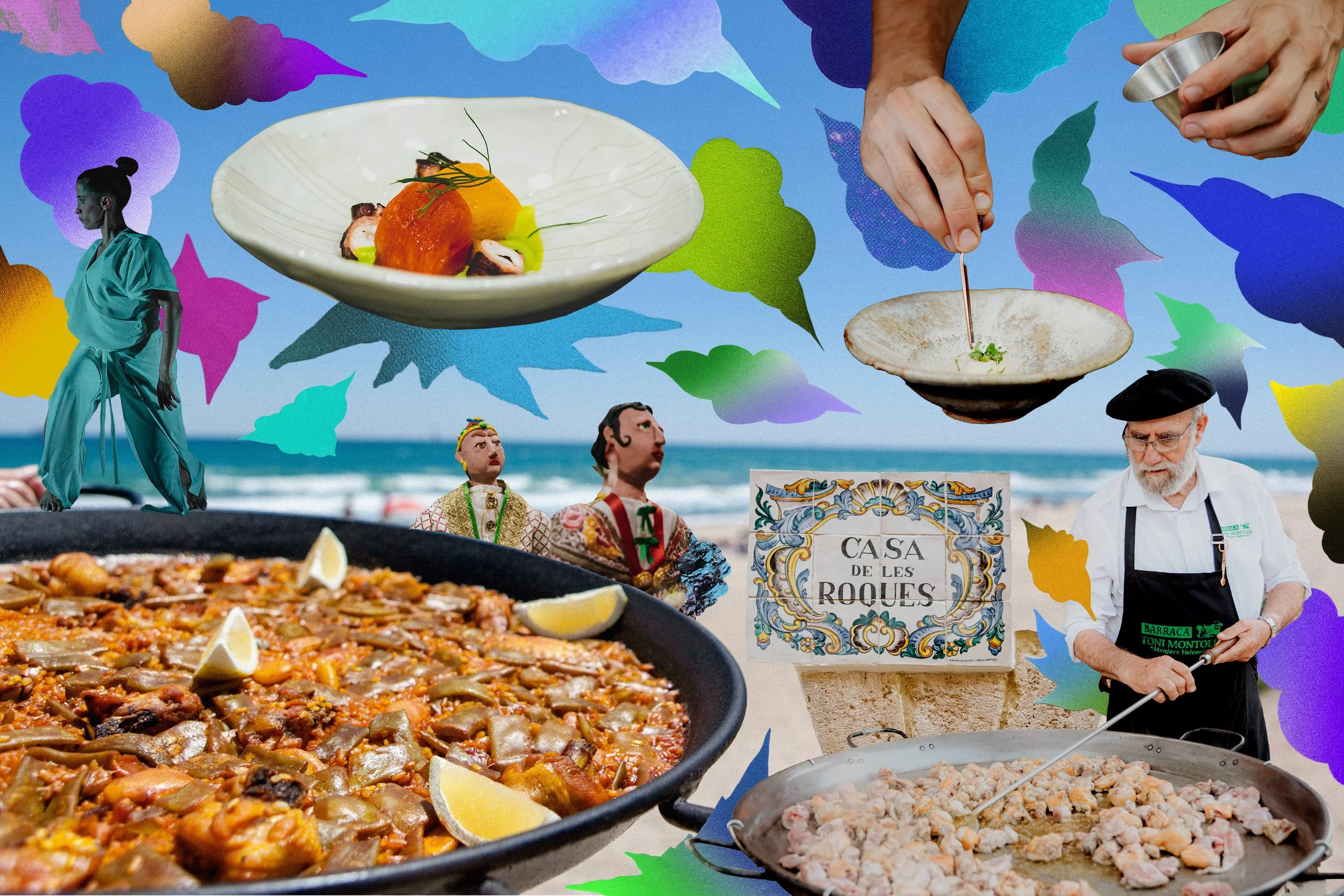
ILLUSTRATION BY HISHAM AKIRA BHAROOCHA
WHEN I’M SLIGHTLY DEPRESSED, I think of a tomato I ate in Valencia. Fuchsia-red and snappy in texture, it had the firm, juicy flesh of a cold nectarine. It was life in a bite. I was in the coastal Spanish city for the annual 50 Best Restaurants awards, a gala commemorating the finest ones in the world. Taking the week before to explore, I found an ornate, melancholy place that was also palpably salty: oceanic flavors ever present in cured fish, briny vermouths, sea-side air, and my stinging tears — triggered with bizarre ease in Valencia. Given the right song and a particularly nostalgic plaza ... glassy eyed again! I wove in and out of the city’s Baroque cathedrals dripping in sweat (saltily on theme). The naves were always dark and cool, with the sweet, musty scent of a basement. My eyes took a second to adjust, pupils dilating back into focus before supersize gilded portraits of saints or Christ, endlessly dying for our sins.
To reach the beach from the little apartment I rented on a narrow street in the El Carmen neighborhood, I passed through El Cabanyal, the old fisherman’s quarter, which was lined with buildings tiled in bright, geometric patterns. Tiles are good for salty air — their glossy exteriors are immune to erosion. I got a tinto de verano at La Fábrica de Hielo (literally, the ice factory) for the golden hour, followed by tapas and vermouth at Casa Montaña, a tavern dating back to 1836. Dinner at Anyora felt delightfully local, featuring sweet langoustines and tender eggplant dolloped with smoky sobrasada. The vintage stores of Ruzafa (the city’s new, hip neighborhood) were surreal — with an eerie Californian edge: racks filled with polos and sports jerseys. The markets were dazzling, brimming with figs as big as baseballs, glossy black-red cherries, dusty legs of jamón, endless anchovies. Tourists walked through them wide-eyed and bovine. Locals wasted little time, rattling off their produce orders to vendors, carts by their sides.
Across three of the city’s best fine-din-ing restaurants (Ricard Camarena, El Poblet, and Quique Dacosta Restaurante), I experienced riffs on preserved tuna, elevating the fish to the divine by way of lacto-fermentation and dry-aging. The result is like tuna jerky, or jamón ibérico with fish instead of pork. Differing levels of moisture and fat create various versions, some meatier in texture, some melting in the mouth like curls of butter. All of them with the wistful, craveable taste of salt. My tongue wets remember-ing. Naturally, my eyes prickle too.