PUBLISHED IN PRIOR
Where to Tuck In and Thaw Out
From a lamp-lit Shanghainese hideaway to a revived French bistro, a Koreatown soup joint to a 90s pasta spot — a guide to NYC’s most soul-warming eateries this winter.
ART BY CHRISTIAN MARTIN
KEEPING UP WITH THE AMOUNT OF restaurant openings in New York is dizzying. And while new blood is always inspiring, I find the endless roundups of new and only new, to be a touch fatiguing. Sure, a hunger for novelty is a compelling motivation. But as temperatures drop and the wind begins to sting, there’s often a more bodily compulsion in the hunt for that perfect winter meal. The northern countries have their own words for it: gezelligheid in the Netherlands, koselig in Norway, gemütlichkeit in Germany, mysig in Sweden, coorie in Scotland. The most famous is probably hygge, hailing from Denmark. While each term takes their own slight spin, they all convey the warmth, comfort, coziness, and conviviality shaping certain spaces and their inhabitants. In other words, the ideal conditions for where to dine come winter in New York. Below, you’ll find a list of restaurants falling squarely within this spirit, from those I enjoyed recently discovering to those I have loved for years. Some new, some old — all made to warm the soul.
Wei’s Williamsburg
Late night Shanghainese food bathed in warm, lantern light.
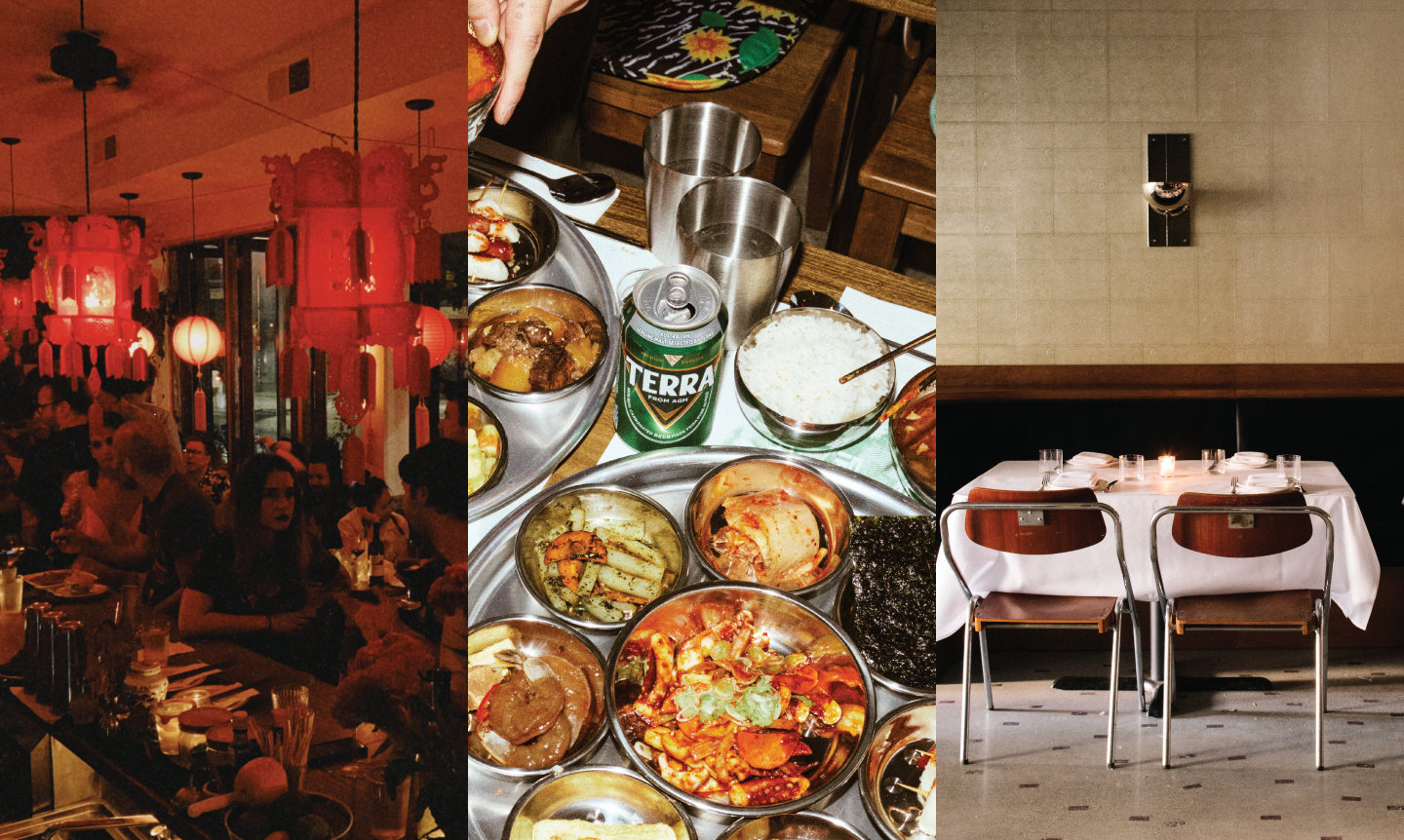
Years ago, I fell into a martini and oyster-fueled friendship with a chef. At the end of long, raucous nights, we’d come here to spill our secrets in a booth. His love of the restaurant imprinted on me. Today, Wei’s remains my favorite restaurant in the world. An East Williamsburg haunt since 2014, the Shanghainese-style restaurant takes the shape of a triangle, strung with glowing paper lanterns — soft and moon-like. Dark leather booths line the walls, disco lilts throughout, and the food? Hauntingly craveable: piping hot soup dumplings that pop and pour through the mouth; snappy, emerald green pea shoots; crispy salt and pepper shrimp, its shallots like the salty shards at the bottom of a chips bag; slices of cold, pickled cabbage glossed red with chili oil; and their signature Shanghai Cowboy — a cocktail made with both whiskey and the notoriously highproof Chinese liquor, baijiu. Alone, baijiu can be quite abrasive. In the Cowboy, it becomes aromatic — floral and licorice-like. The drink basically sips like a funkier Sour, encapsulating the restaurant itself: familiar and mysterious at once.
Clemente Bar
A collaboration between an intrepid chef and a famed artist.
Known for turning his restaurant Eleven Madison Park into the world’s first plant-based recipient of three Michelin stars, Chef Daniel Humm’s latest project is a collaboration with neo-expressionist artist Francesco Clemente: a bar and food concept lined with the legend’s paintings, housed within the former private dining space above Eleven Madison Park’s grand hall. Their cocktail program has always been exceptional and Clemente Bar is a natural extension of that. Take the Clemente Martini, infused with green curry and saffron, its olive tasting of smoky Algerian spices. Or La Tomatina, an effervescent, tequila-based drink with olive sake, tomato water, and a single disk of tajin-dusted white chocolate. Dishes like their Tonburi, a bright carrot and horseradish spread topped with tonburi (a plant-based stand-in for caviar) and sake pickles make for zingy openers to their deeper dishes like the Clemente Burger (a lightly fried, oozing mushroom disc, further enriched with a creamy plant-based take on ranch) and Agedashi Dog — a log of delicate fried tofu heaped with black truffle. Peruse the walls between dishes to admire Clemente’s gestural creations, painted directly onto the surface or framed and illuminated from behind.
Basta Pasta
A timelessly elegant backdrop for Japanese-inflected Italian dishes.
Opened in 1990 (with its original in Tokyo since 1985), Basta Pasta is a serene and exacting restaurant that serves upscale Italian prepared by Japanese chefs. The open concept kitchen was ahead of its time back then — a web of glossy stovetops and counters flanking the entryway. So were its dishes. I remember watching them roll out an entire wheel of parmesan cheese when I was a little girl, drop in a tangle of spaghetti, and then mercilessly scrape and mix until the cavity began to melt. The pageantry! These days, pasta alla ruota can be found in many places. But it was cutting edge for New York back then. Start with the bagna cauda, bright market vegetables and warm anchovy dip, followed by the spaghetti con uova di pesce, dotted with tobiko and strips of aromatic shiso — a beautiful moment of that Japanese-inflected Italian the place is known for. Note the white tablecloth topped with crisp paper, good for doodling if you’re a child and comparing signatures if you’re an adult. While admittedly evocative of a certain early 2000s chic, Basta Pasta never lost its quality nor aesthetic dignity. In short: a timeless treasure.
Bridges
A sleek, sexy scene for innovative small plates.
The 90s erotic thriller Basic Instinct has a notorious scene. Sharon Stone’s character is being interrogated by a room of cops. (Cue the infamous flashing as she recrosses her legs, the white mini dress, the lit cigarette.) Now while lighting is bistro warm, not precinct cold, the design of Bridges — a new Chinatown concept from former estela chef Sam Lawrence and interior designer Billy Cotton — is as sleek, restrained, and rousing as this scene. There are specific parallels: gray, square-tiled stony walls evocative of cinderblock, polished granite-like floors, lustrous black leather, chrome accents. But what the two seem to share above all is a certain dark thrill. To enter Bridges is to enter a world in which you too are a sexy character in a trenchcoated era. And the food? Dialed as a fresh Rolex, shaped by both French and Basque influences. Think: creamy grilled oysters swimming in butter and capped with a single, salty caper; scallion-studded sweet shrimp encircled by warm uni custard, two tongue-like folds of uni draped atop; nutty sweetbreads with tender leeks; and thick, lanky crab legs, served with pickles impaled(!) on chrome skewers.
Lhasa
Spicy Tibetan soups and hearty momos for a laidback lunch.
When one needs comfort, Lhasa is the answer. This casual Tibetan restaurant lives on a corner of the East Village, serving up steaming bowls of savory soups and plushy momos (steamed dumplings with a variety of fillings — their silken chive one as satisfying and umami-rich as their meat options) with their two sauces, a smoky red one and a creamy white one. I go for either their spicy, meaty shoko phingsha — a rich beef broth laden with glass noodles, ruffled wood ear mushrooms, and your meat of choice (go beef, braised long and slow), or their mokthuk, a gentler broth filled with those fat, happy momos, and sprightly leaves of bok choy. Get the Lhasa Combo (a mixed platter of vegetable and meat momos) to start. Wash it all down with an icy rice lager.
Kisa
A buzzy enclave for a Korean set meal.
On a bustling corner in the Lower East Side, Kisa takes inspiration from the casual diners popular with taxi drivers in Korea. While only a few months old, the place has already become a neighborhood mainstay. The magic lies in its simplicity and abundance. There are only four order options (beef, pork, squid, or bibimbap — a rice and vegetable dish). This comes with a rotating assortment of beautiful banchans (side dishes like spicy marinated squid, shredded radish in perilla sauce, or kimchi), open to three refills. There’s also a soup dish. This entree, eight to eleven sidedishes, and soup are priced at a flat fee of $32 — all delivered to your table with a certain brand of smiling, energetic Korean hospitality the owners became known for at their first concept, C As In Charlie (where free shots of soju delivered to your table were not infrequent). The interiors are deeply nostalgic — evocative of my own Korean grandparents’ basement: framed baby photos full of the little hats and stiff silks of traditional Korean dress, a portly TV, and an electric fan.
Fish Cheeks
A vibrant, seafood-leaning temple to Thai cuisine.
I took a walk recently with Jenn Saesu, one of the restaurant’s owners. She spoke about the importance of consistency. Cooking with emotion can be risky, she says. Because things change. You might add a pinch of this, a dash of that, depending on your mood. All of a sudden, you have a hit and miss restaurant on your hands. Consistency is Fish Cheek’s secret sauce, and why this accoladed eatery has maintained its singular status since 2016 without lapse. Any time I’ve fantasized about their mythic chicken wings fried in a thin, crispy coating of chili, lime, and makrut lime leaf; whole steamed branzino quaking in still bubbling broth; tender, sauteed cabbage bathed in garlicky fish sauce; creamy coconut crab curry; crab fried rice laced with meat and egg (I’d list the entire menu if word count allowed) — the reality tastes as good, nay, better, than the fantasy. While I love this place for a winter meal, its prime location on the broad, cobblestoned Bond Street, peppered with outdoor seating, makes for a perfect alfresco dining spot on balmy nights too.
Soso’s
Indulgent bistro fare in a groovy, pitch-perfect lounge.
Restaurants in New York are getting louder. A big reason is poor sound design. Where to go when you want the fun, the crowd, the energy, but not the tinnitus? Soso’s — where soft shapes, sound-dampening materials, and French-American bistro fare produce an indulgently comfortable experience. From the same team behind Chinese Tuxedo and The Tyger, Soso’s is their newest concept, an extension of their bar, South Soho Bar next door. The decor is that of a groovy, midcentury funhouse. Jewel-toned windows punctuate a wood paneled wall. Burlwood circular tables and plump, leather patchwork banquettes sit pretty on wall-to-wall carpeting. With over 60 offerings, cocktails are properly done and plentiful while dishes are rich and hearty — appetizers like escargots drowning in herbed-butter with nice, heaping entrees. Their plat du jour is worth noting (they had duck that day, which my table ordered and devoured, pulling apart the confit-style leg and slicing into tender pink breast). Don’t sleep on their plant-based entree: a fat wedge of succulent, braised cabbage — juicy and toothsome as a slab of premium beef.
Saint Julivert Fisherie
A date night destination for seafood and cocktails.
On a tree-lined street in Cobble Hill is the platonic ideal of a date night restaurant, a love letter to the flavors and ingredients of port cities around the world. Known for their Spanish cooking, chef couple Alex Raij and Eder Montero (behind Txikito in Chelsea and Saint Julivert’s next door neighbor, La Vara) are at the helm here. The menu changes as often as the tide itself, but classics include things like silky cantabrian anchovies, raw-cured wild shrimp, and king oyster mushroom soba (the noodles are made from mushrooms!) dotted with juicy clams. A constant? The sublime construction of their sauces. Aromatic, savory, bright, thick or thin, Saint Julivert’s sauces dazzle. I’ve been known to tilt a plate or two into my mouth, an act I would not suggest at this decidedly elevated spot. Their wine list is star-studded but it’s the cocktails that can’t be missed. Most recently, I had their salty spin on a Rebujito: gin, fino sherry, olive brine, and citrus soda — one of the more delicious things I’ve ever tasted. A long, stainless steel bar runs down the middle of the space, perfect for leaning close to your dining partner and negotiating how to split that last tentacle.
Mitsuru
High design meets sushi in the West Village.
West Village newcomer Mitsuru is a design destination as much as it is a sushi one. The aesthetic is handsome — masculine, sumptuous swaths of forest green velvet, original brick, and warm wood — a fun departure from the minimalism of most upscale sushi restaurants. Owner Grant Reynolds also runs Parcelle, one of the city’s best wine destinations, so the beverage program is expectedly meticulous, as is the sourcing behind each piece of furniture (anyone who’s visited Parcelle’s wine bar in Dimes Square can attest to Reynold’s keen eye). Mitsuru’s pieces were similarly acquired through a mix of auction and dealer finds — a wasabi-green Kagan sofa in one area cuts a fine, airy line through the richer-hued space. Mitsuru however, the restaurant’s chef and namesake, is the real protagonist here. Coming from the legacy midtown sushi destination, Sushi Yasuda, this is Mitsuru’s first independent endeavor. Night after night, he not only presses choice cuts of fish onto rice, but has developed an extensive selection of heartier dishes, like delicately fried burdock root and sea bass tempura — light, crispy batter clinging to buttery fish flake.
Ukrainian East Village
An old-school East Village institution for Eastern European classics.
Around since 1963, Ukrainian East Village is one of those restaurants that must be protected at all costs. Housed in the Ukrainian National Home (an austere building marked by Cyrilic signage), a fluorescent-lit hallway leads to an old-timey dining hall serving classic Eastern European fare like stuffed cabbage, matzoh ball soup, and pierogies. Flyers coat the entryway, for tango classes or fundraiser dance nights. The old New York feel of it all makes this place a particularly cinematic and cozy rainy day hideaway.
Smithereens
A grit meets glam love letter to New England seafood.
From chef Nick Tamburo, formerly of Claud, and beverage director Nikita Malhotra, formerly of Momofuku Ko, this East Village newcomer is a sexy, punky homage to New England seafood. The space is semi-subterranean and deep, continuing far back into little enclaves and zones. The color scheme is that of the Atlantic: slate grey with sage-seafoam undertones. White lamps punctuate the space like lighthouses glowing in the night, bouncing shine off burnished black wood tables. Food is that of an elevated, salty tavern, meant to be consumed in a chunky Aran sweater (fished from a thrift bin or The Row — this spot straddles both worlds). Raw fish dishes show the delicacy and restraint of the place while cooked offerings like warm beans with red shrimp, squid, and sea urchin are made to shovel down with a spoon through hums of pleasure. Their lobster roll arrives on a pillowy potato bun, meat dressed with lobster stock mayonnaise for a heady lobster on lobster moment. While sans seafood, their tender swiss chard and salted radish dish, sitting in a pool of mushroom broth, is a menu star.
Han Bat
A cozy Koreatown mainstay for medicinal soups and stews.
When I was growing up and felt a cold coming on, my mother would take me here for seolleongtang — a milky-colored soup made from ox bones. The K-town pillar has served the medicinal, ancient dish since 1990. You season it yourself with a little bowl of pre-mixed salt and pepper, giving savory edge and toasty heat to the mineral-rich classic. Their extensive menu covers a variety of Korean staples from bubbling tofu stews to heaping piles of bibimbap (served in a hot stone bowl topped with vegetables and a raw egg). It all does the trick, washed down with sweet makgeolli (korean rice wine) and supplemented with endless cold, pickled dishes of banchan.
Le Veau D’or
An uptown French bistro with a comeback story
Opened in 1937, La Veau D’or has been closed for the last five years. Its revival pays homage to its heyday, helmed by chefs Lee Hanson and Riad Nasr, the duo behind contemporary-with-an-old-soul French eateries Frenchette and Le Rock. Blood red banquettes, checked tablecloths, and wood panels hark back to the original aesthetic, now singing with fresh gleam. The food comes from the restaurant’s old menus, where rich, uncompromising classics like frogs’ legs, pâté en croûte, and tripe reign.
estela
The original home of fancy small plates in a warm, storied space.
One cannot praise the innovative, small plates eatery without nodding to the original: estela. Trained under food legends like Francis Mallmann and Alice Waters, Uruguayan chef Ignacio Mattos has helmed many restaurants across his career. But estela is what put him — and his subsequent disciples — on the map. With multicultural influences and floors that creak and bend like a living being itself, the soulful Nolita establishment is known for their cult-status dishes, like the moody fried arroz negro, tinted onyx with squid ink, or their plush ricotta dumplings, rich and piquant with pecorino, like biting into fattened air. The space — rickety, tight, and bathed in the amber light of sherry — feels like the embrace of a very old couple who never stopped loving each other.