COLUMN PUBLISHED IN DEPARTURES
Dishing with Chef Ignacio Mattos
The chef king of downtown Manhattan on the perfect gift, underrated foods, and why he doesn't want Bob Dylan in his restaurants.
PHOTOGRAPHS COURTESY OF THE CHEFS
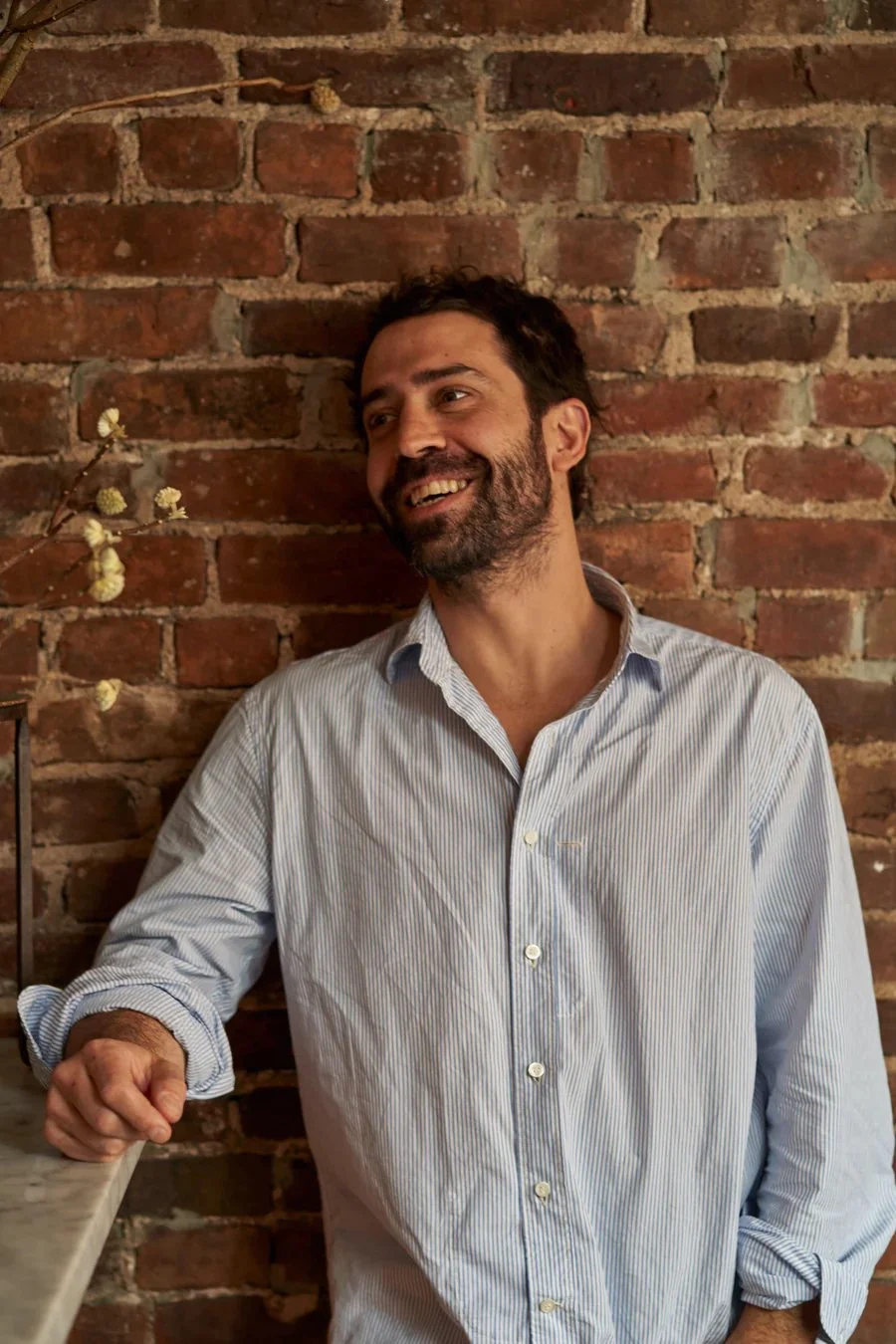
CHEF IGNACIO MATTOS has been the face of quintessential New York City restaurants for the past decade. At every one in his downtown empire (Estela, Altro Paradiso, Corner Bar, Swan Room, and one delightful uptown exception, Lodi), electricity in the air meets quiet elegance on the plate. The dishes themselves hold Italian, Spanish, and Middle Eastern influences, while the Uruguayan-born chef's technique and philosophy reveal his training under culinary legends: the Argentine fire icon Francis Mallmann and Berkeley's farm-to-table pioneer Alice Waters.
What is your favorite place to live?
I love Italy. They protect their heritage. I like the Dolomites in the summer. I love Cammillo in Florence. It's a trattoria, the best restaurant in Italy. Female chef. They have this celeriac, egg, and bottarga dish served lukewarm. They make this egg tart that is insane. The kitchen is kind of open, so you could see it if you are in the main dining room. And a third place: Trattoria D'ana. You do this hike out from the fields of Positano, like an hour and a half, then end up at this little restaurant under these arches, on the beach.
Do you have a uniform?
Straight-leg pants, white T-shirt, or a cotton top - either black or white, all cotton. I hate linen. I just don't like the texture at all. It's a little exhausting. If it's not ironed, it's just too raggy. Some people can pull it off. I cannot pull it off.
Where do you get your haircut?
Laila [Gohar, Mattos' partner] does my hair, but after she punished me with a bang that was too short, I got a little traumatized. I looked like "Dumb and Dumber." After that, I've been committed to this woman, Fumika. She's pretty amazing, part of the studio Shair.
How do you define delicious?
Forget about conceiving a brilliant idea that has many elements ... I think things can be a lot more subtle. I'm more and more in love with less. I love more in the settings, rococo kinds of spaces — fabrics, and textures, and more, and more. But on the plate, less.
What creatively fuels and replenishes you?
Europe - Paris, Vienna. I really appreciate when places were built to last. Three hundred years later, they're still standing with integrity. I love going through the Met; always fun to get lost. I love going to Central Park. I love landscaping. That's something that I would have loved to do. I love Burle Marx in Rio. The High Line is really well achieved. It's a little apocalyptic, futuristic - nature taking over a city.
What is a controversial opinion you hold?
I'm trying to get rid of music in the restaurant. It gets in the way at times. The most beautiful restaurants have the bustle of just people. I adore that. Music usually makes everybody louder: Anything that you cannot identify is okay in a restaurant, but the moment that you're at a table and singing a song, it's over.
What is the most joy your restaurants have ever seen?
Having Obama at Estela. It lit the room in a very unique way, almost science fiction-like, the way the Secret Service operates - an aura that can't be described, but you feel it. The moment he walked in and everybody was just clapping and going crazy. It was like a soccer match.
Who is someone from history you wish you could have at your restaurants?
I was just thinking about who I would not want to have at the restaurant: Bob Dylan. Everything he's done is absolutely amazing... I think he would not be satisfied - it would be unfortunate. So he would be banned. I just don't want the disappointment. It would be nice to have all the Rolling Stones.
What is the best gift?
If you give me flowers, I'm always going to be happy. Tulips die with the most decency and they have a lifetime that is the most beautiful of all - when they're erected, then they start bending and moving. I really like it when they start dying. But I don't get flowers. I would like to get more flowers: white tulips.
What food or drink is misunderstood?
I think hot dogs are very underrated. I'm talking about an elevated version of a street hot dog. In France and in Brooklyn, they used to make a hot dog that was divine. I would not put anything on top. Mustard would be criminal. I love a crappy New York slice. But then you can have a pizza in Japan and . . . divinity. I think these hot dogs, like that pizza, are divinity.
What is your favorite dessert?
I could have profiteroles every day.
Which institutions must be protected at all costs?
Omen is an institution. Emilio's Ballato. Wu's Wonton King. Hasaki. Places like La Grenouille, where you have to wear a jacket. It's a gorgeous room and (the most important thing for me) a range of people. I really worry when I look at a place and everybody's the same age. It's either a geriatric hospital or a dorm. I think for any environment to be healthy, you need to have the range. It's very important that the place has kids around.
What do you miss about Uruguay?
The melancholy. It's a very melancholic place - the way that things sound, how people behave. People are very earnest. Sometimes you find it in New York. It has pockets, but it's different. But it does have melancholy for me, this town. In Chinatown. I love Chinatown. I think it's the only community here that has this still-preserved place, this social-gathering place. They have huge, big roots and pride in that they understand where they come from, and they don't compromise.
Dishing With Chef Ayo Balogun
The chef behind Brooklyn's Dept of Culture talks jollof rice drama, Junior's cheesecake, and a dish that forever changed him.
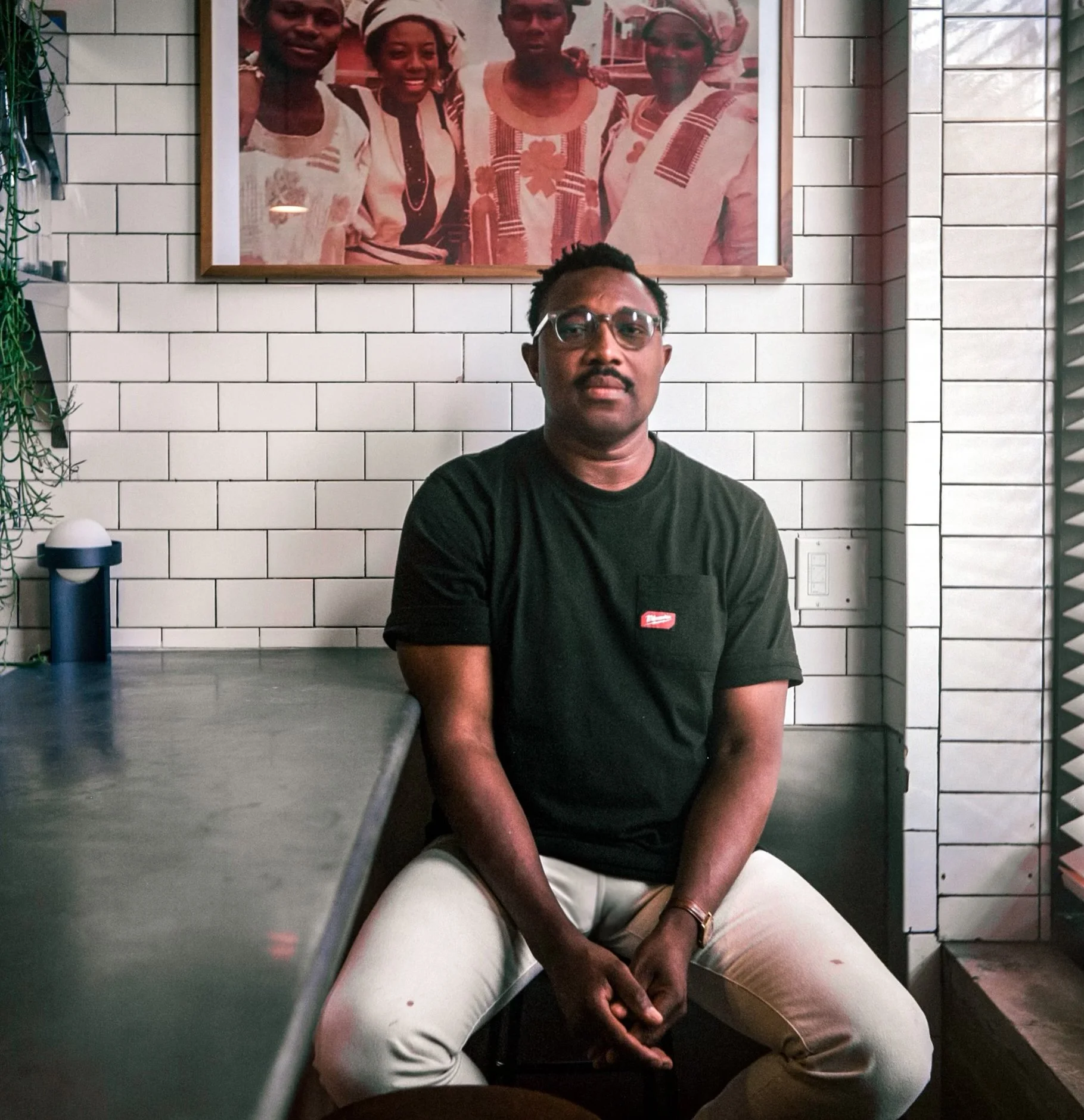
THE HARDEST RESERVATION to get in New York City? Dept of Culture. Serving a tasting menu of North-Central Nigerian cuisine, Chef Ayo Balogun's 16-seat, communal-style restaurant in Brooklyn's Bedford-Stuyvesant neighborhood has had the city buzzing for a taste since it opened last year. Around the corner from Dept of Culture, Chef Balogun also runs a neighborhood cafe, The Council Cafe. As for his latest venture: This past July in Clinton Hill, he debuted a second Nigerian restaurant, Radio Kwara, inspired by the pepper soup of the chef's native Kwara State.
How do you define delicious?
You know those moments you spend with somebody you fancy or admire, and everything is magical? When you're with interesting company, it goes beyond taste. Sugar is sweet. But good company - that's part of the element of deliciousness. A tasting menu by yourself, it's not not delicious. But in good company, you have a back-and-forth going, "What do you think about that?" It exaggerates the deliciousness.
What is a nostalgic flavor for you?
Suya. It's a dry rub they use in parts of West Africa on beef, and chicken, and all of that. It's got a savoriness with hints of sweetness - some add cloves too. There's pepper, there's peanut, maybe a curry. Some put fermented locust beans. It just creates this wealth of flavors.
Share a food memory that shaped you.
One of my grandmothers we called Mama. Mama has been old since I was born, almost like a legend. She once served me this dish: amala, made with jute leaf and fermented locust beans, cooked slowly over a wood fire. It was one of those dishes I'd always imagined to be old people's food. But it was the most delicious food I've ever had — the pinnacle of softness, details. When the James Beard [Foundation] called us to come and cook for them, that was what I made. They had to actually pay us extra because people kept eating more.
Where do you eat on your days off?
I'll go to a bodega and have an egg sandwich. But you don't go to any bodega. You have to be loyal to one bodega - to the guy who knows what he's doing. Once that artist is gone, you move on. I also hunt pancakes. The best pancakes right now? Pastis. I really wish it was a mom-and-pop. But no, it's Pastis. In this neighborhood? Saraghina Caffè. In Dumbo, Clinton St. Baking Company. In Boerum Hill, East One Coffee Roasters for these malted-milk pancakes that are badass.
What's a food or drink not enough people know about, but really should?
There's this yogurt drink called fura. It's a Nigerian drink made out of millet and pepper. So it's got a little tanginess. Smooth. Brilliant in hot weather.
What's a woefully misunderstood food?
Jollof rice. People talk about Nigerian jollof rice and Ghanaian jollof rice. It's an evolution of one dish. When the Nigerians make jollof rice, we like it smoky. The Ghanaian jollof rice is a little closer to the traditional one - made by the Wolof people in Senegal and Gambia. But for some reason, the Nigerians and the Ghanaians are fighting over who makes better jollof rice. I can't imagine what the Senegalese and the Gambians are thinking. Imagine New Yorkers being like, "We make the best tacos." And the Mexicans are like, "What?" (Although, to be quite honest, Nigerians make better jollof rice, don't let the Ghanaians tell you otherwise). But now the Liberians are talking about jollof rice. I'm like, "Stop." There are levels to the game. Stay out of it.
What's the best jollof rice in New York?
There's a lady who makes this jollof rice at a spot called African Pride in East New York. Sometimes you'll see me in their kitchen. She's from the same part of the country as me so we have similar sensibilities in terms of flavors. She makes the best jollof rice in New York.
What do you bring to a dinner party?
Go to Junior's, grab a cheesecake, and everybody will be happy. There's this quote by the writer Tom Robbins: "Who knows how to make love stay? Tell love you are going to the Junior's Deli on Flatbush Avenue in Brooklyn to pick up a cheesecake, and if love stays, it can have half."
What’s you go-to-good mood music?
There’s this music preceding Afrobeat called Fuji. It’s a genre of Nigerian music in the North-Central of Southern part of Nigeria. As a kid, I hated it. Now I like it, even the crass ones. (If your parents caught you listening to that, they’d kill you!) When I’m getting sluggish, the front of house will play this music and I’m like, “My secret pump-up song!”
Which restaurants abroad have shaped or inspired you?
There’s a place called Lyle’s in London. Absolutely brilliant. That pomp. I also like this place called Kol. There’s something about the British sensibility that’s a little different from what we do here that can be kind of cool.
What’s your typical uniform?
All white — white T-shirt and white jeans from Industry of All Nations. It’s natural fabrics, not bleached, not dyed. Everyone is like, “How come you don’t have stuff on yourself?” The minute somebody says that I’m like, “Well, now a stain is brewing.”
What objects are you loyal to?
I like to write so I bought a reMarkable. It’s a tablet — you just keep writing and keep everything in one place. But sometimes, you’ll find me with a pen and paper. I’ll sit in a café and try to reflect on one thing or another, trying to put it in writing.
What’d do you miss the most about home?
I don’t miss home. I miss time — time that I can never have again: When you’re 12 years old and you think you’re the smartest creature in the universe. Before all your siblings were married and went and did their own thing, and there was that truth to a nuclear family. I miss that time.
Dishing With Chef Alex Raij
The force behind New York City's most beloved Spanish restaurants talks Basque food, essential drinks, and more.
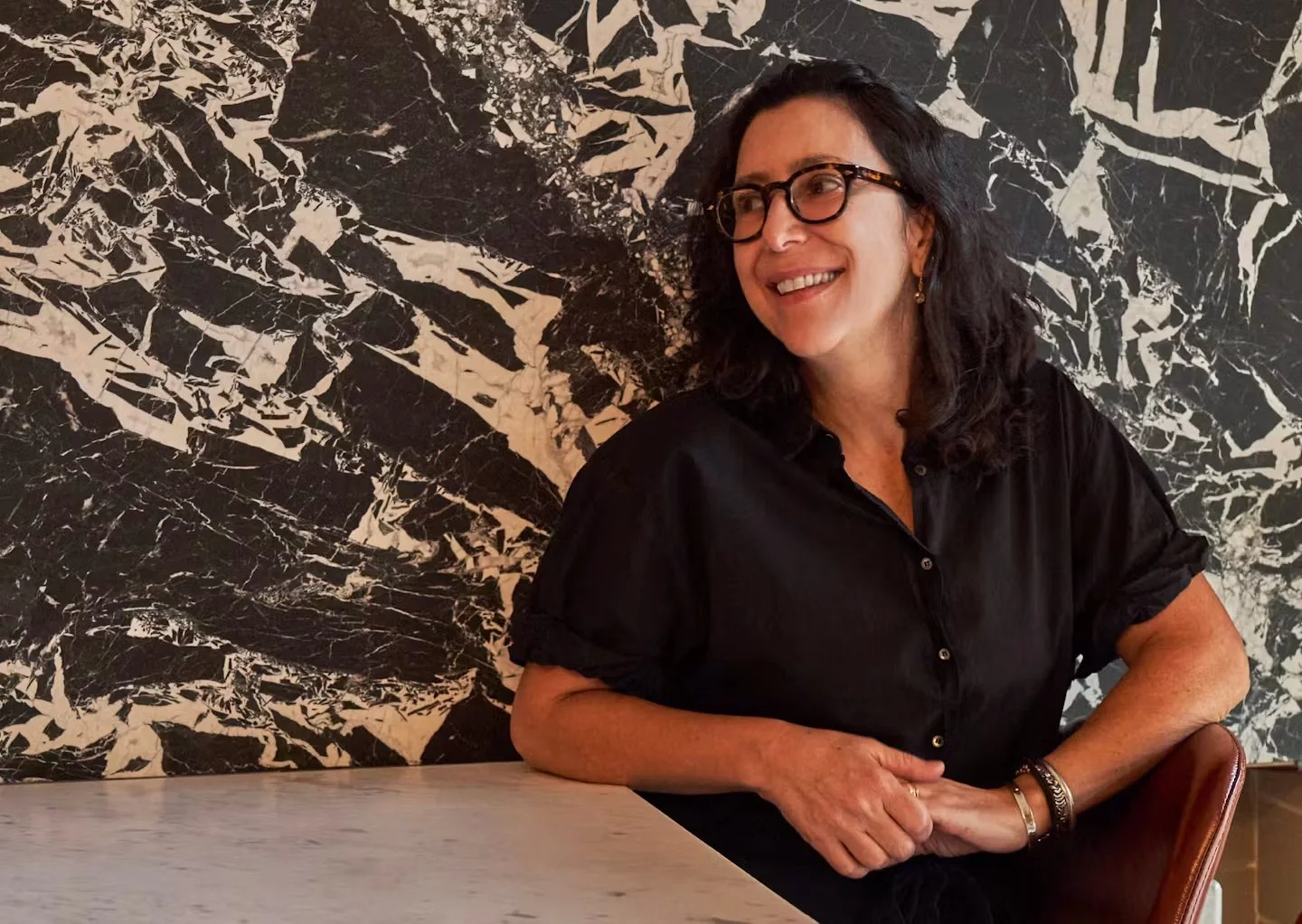
CHEF AND RESTAURATEUR ALEX RAJI helmed the rise of Spanish cuisine and tapas culture in New York City in the early aughts. Alongside her husband Eder Montero, a chef from Spain's Basque region, she now runs the city's Andalusian-influenced La Vara, seafood-centered Saint Julivert, and Basque-inspired Txikito. But her background is even more diverse: She is the child of Jewish-Argentinian immigrants, and her work is a globe-crossing conversation in flavor.
How do you define delicious?
Cantonese food is undeniably delicious. I call it the perfect food — so calibrated, so diverse. It's super elusive, like perfume almost. Basque food has that, too. It's very quiet, but there's something noble about it.
What foods make you nostalgic?
Argentine food - Jewish-Argentine or Italian-Argentine. Gnocchi, tortellini, milanesa. I worked at a food court in Minneapolis in my teens with a lot of Vietnamese and Hmong immigrants. My food-court friends and I would go out to Brooklyn Center, kind of like Flushing [in Queens, New York City]. I had never tried proper dim sum before. and it was a revelation
What's a dish that fascinates you?
In the Basque Country, they eat a lot of Ensaladilla Rusa - Russian [potato] salad with mayonnaise. Mayonnaise is from Mahón in the Balearic Islands. Even though it's considered a base here now. It's an important mother sauce. You could just make the best version of Russian salad instead of saying, "I've moved beyond it." Constantly revising is innovative. Emulsion sauces are innovative. I obsess about pil pil - a mayonnaise of sorts — bound by the gelatin in cod. You poach the fish in olive oil and then make a sauce out of the poaching. It's an onomatopoeia; the oil pings onto the side of the pot: "pil pil."
What's a food or drink that more people should know about?
When I opened Saint Julivert, I was obsessed with rhum agricole, pot still rum. It has a lot of strange aromatics and briny, olivey flavors because it's made from cane juice which ferments, so it has more funky esters. When I tried a Ti' Punch [a drink from the French Caribbean], I was like, "I want to drink this for the rest of my life." It's iced agricole, with a lime cheek in it. And you can put coconut water in it — delicious and savory.
What do you like to bring to a dinner party?
I was drinking with this former floor sommelier from Le Bernardin, and she was like, "If you haven't had this wine — oh, my God, you have to." It was this (Domaine) Pattes Loup, a Chablis. [Chablis] has all this seashell, dead seabed stuff in the soil.
What's your secret kitchen weapon?
Shrimp shells. Mushroom trim. We'll twist off the ends, wash them. shake them dry, and make stock. My mom did stuff like that too: scrape all the meat off the bones, off the fish, and use the bones or shrimp shells to make stock. Make salsa macha or XO sauce. It's just the responsible thing to do.
What are you wearing right now?
A Basque sailor shirt. It's French, but I think it's from Hasque sailors. The Basque Country has one foot in France and one foot in Spain. The Spanish Basques have a stronger identity because they were persecuted under Franco, with efforts to destroy Basque language and culture. The Spanish side is what I'm more concerned with because my husband's from there (and I probably shouldn't say this), but I think the food's superior.
What restaurants have inspired you?
Bar Magenta in Milan. It is beautiful inside, with two huge posters of yellow raincoats in the back. If you go there at lunch, you get tripe and salads. Etxebarri is probably the best restaurant I've ever been to. So innovative and so Basque. This one guy runs this grill. He would take these baby eels, put them in a basket and just kiss it with fire. He made mozzarella from his own water buffalo on the property and would even have Catalan products like gambas de Palamós, those ruby shrimps. Or (he would) buy an Iberian pig to make his own ham and chorizo.
What is a joyful memory from your restaurants?
In every restaurant I've ever owned - except for La Vara, strangely — people just break out in song. Opera. I think people feel free, or there's some kind of exuberant joy. They do what they want, they consider it their place.
Dishing With Chef Elena Reygadas
The Mexican culinary icon discusses pulque, her favorite CDMX spots, and the heritage of cocineras tradicionales.
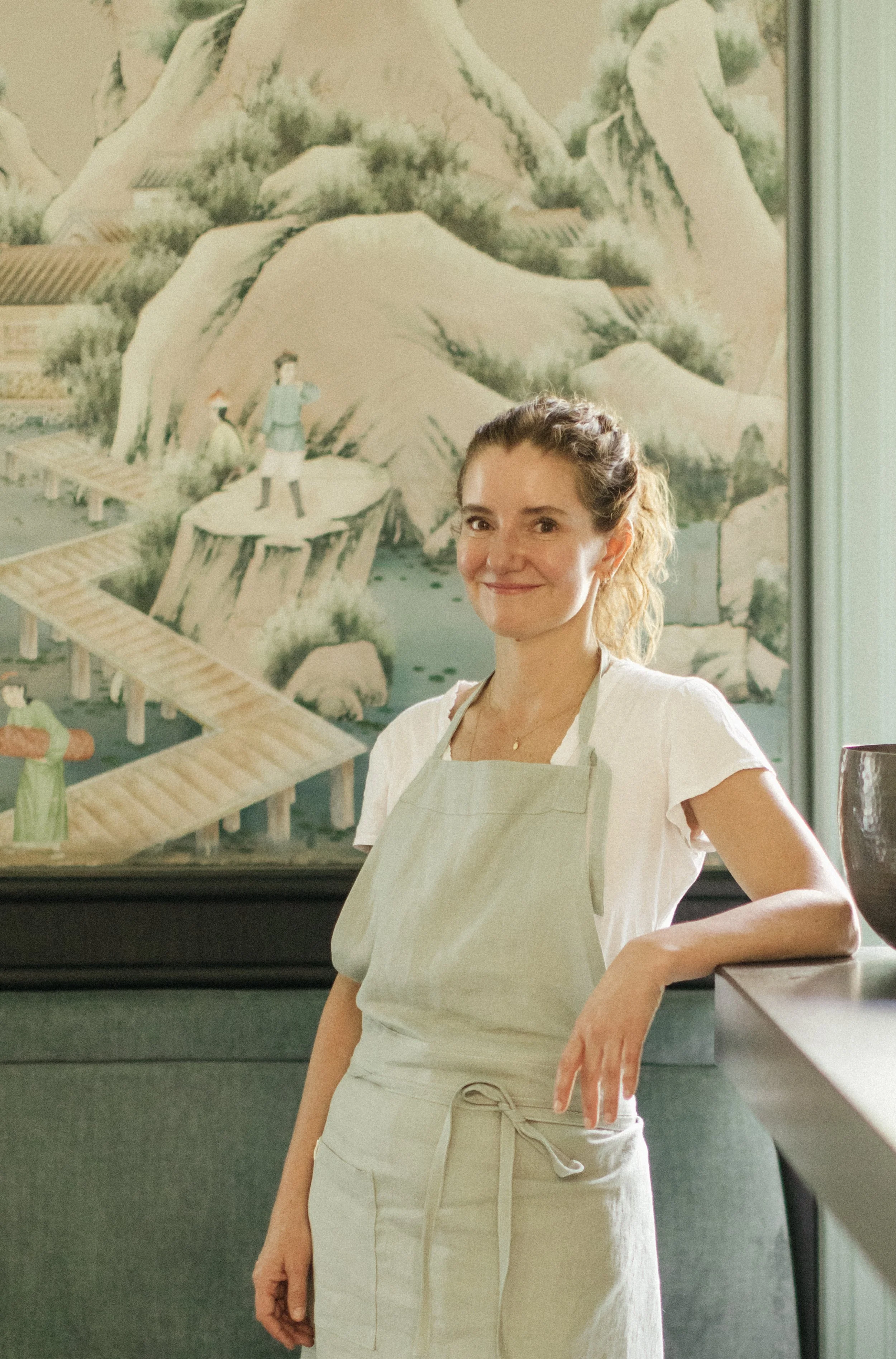
NAMED THE WORLD’S BEST Female Chef 2023 by The World’s 50 Best Restaurants, Chef Elena Reygadas helms some of Mexico City’s most beloved culinary institutions: Rosetta, Lardo, Café Nin, and Bella Aurora, as well as the famed Panadería Rosetta bakery and Salón Rosetta cocktail lounge. She is an enormous advocate of her country and for female leadership and representation in the kitchen, quietly running a scholarship that supports Mexican women who have been accepted to culinary school. And at her most acclaimed restaurant, Rosetta, her creations act as a platform for Mexico’s biodiversity.
How do you define delicious?
Delicious is how you feel in every sense — what you’re seeing, hearing, touching. Seeing beautiful flowers. Feeling a fabric. It’s all the senses being taken care of, awakened in a very pampering way. It’s feeling hugged in every sense.
What’s a nostalgic flavor, ingredient, or dish for you?
Bread. It always reminds me of going to the bakery of this small town — Velasco — smelling the bread, and tasting it just out of the oven. There’s no bread like that anymore. They used to bake only in the afternoons with a wood-fired oven — very earthy, full of flavor, full of a very instinctual knowledge. Big cities, globalization, and industrialization have increasingly erased this type of bread.
Where do you eat on days off?
There’s this place we love called El Vilsito. In the daytime, it’s a garage where they refurbish cars. At night, it turns into a taqueria. It’s in Colonia Nápoles. There are also many young people doing amazing things in Mexico City. There’s this Colombian guy who opened a place called Fugaz. It’s only open from Thursdays to Sundays, with a very small menu. Or there’s this place from Lucho Martínez, a coffee stand called Café Tormenta that I like very much. Or the guys of Makan — their food is amazing.
What’s a food or drink that not a lot of people know about, but really should?
Pulque. I’ve had pulque since I was very young, in Hidalgo — the central part of the country where there are agaves. My father used to drink loads of pulque with fruit, like shakes, called curados. We loved them with oats, strawberries, or pink pine nuts. And in this old bakery, there used to be pulque bread, which I’m now doing too — using pulque as a fermenting agent. It gives bread not only the fermentation characteristic but also makes it a bit sweet. Not the sweet of sugar or honey, another type of sweet. It gives a soft crumb to the bread, too.
How do you unwind?
I love going to museums and galleries. Museo Nacional de Antropología — I always find new pieces because it’s so big. Kurimanzutto is the best and most vibrant gallery in Mexico City. Museo Anahuacalli and Museo Tamayo are also amazing. There’s a new gallery I love called Campeche. Or a great book (I’m reading “Poeta Chileno” by Alejandro Zambra right now). I do yoga at home. I also unwind at markets, from La Lagunilla (I love to go there on Sundays) to the vegetable and fruit markets in the city.
What’s your go-to music to set a good mood?
I love cumbia. Or when I want to give myself energy, I love corridos tumbados — like by Natanael Cano or Peso Pluma. These new ways of self-expression through music from the northern part of Mexico are really interesting. Other times, I love listening to Radiohead.
What are some restaurants abroad that have shaped or inspired you?
Fergus Henderson’s St. John in London. Estela from Ignacio Mattos in New York. Niko Romito’s Reale in Castel di Sangro, Italy.
What are some institutions that should be protected at all costs?
In Mexico, all the food that the cocineras tradicionales do. They’re a national treasure in every sense and should be protected because that’s our history of food and, although very traditional, what the work of contemporary cooks is based on as well. The food is done by women at their home, in their communities, and it’s the way the most traditional recipes and ingredients are kept alive.
Do you have a typical uniform?
There are some Mexican brands that I love and always try to support: Francisco Cancino, Gabrielle Venguer, and Banzo. Also jeans from Acne. In terms of jewelry — I wear this Mexican brand called Gala is Love. I also always wear my Virgins (necklaces with saint iconography on them). The necklaces I’m wearing are the Virgin of Paris, La Virgen Milagrosa, and one from Brazil, Santa Clara. I like this one very much because it has two sides. You’re protected by a pendant hanging from the front and the back.
Are there any other objects you’re loyal to?
I love teapots. I have a British teapot, and it keeps the temperature super well. It infuses very well and is the perfect size. I have a beautiful Japanese strainer I love too. I really like tea, so everything related to tea is important to me. Hojicha tea is my favorite — a roasted green tea.