PUBLISHED IN DEPARTURES
Like Father, Like Son
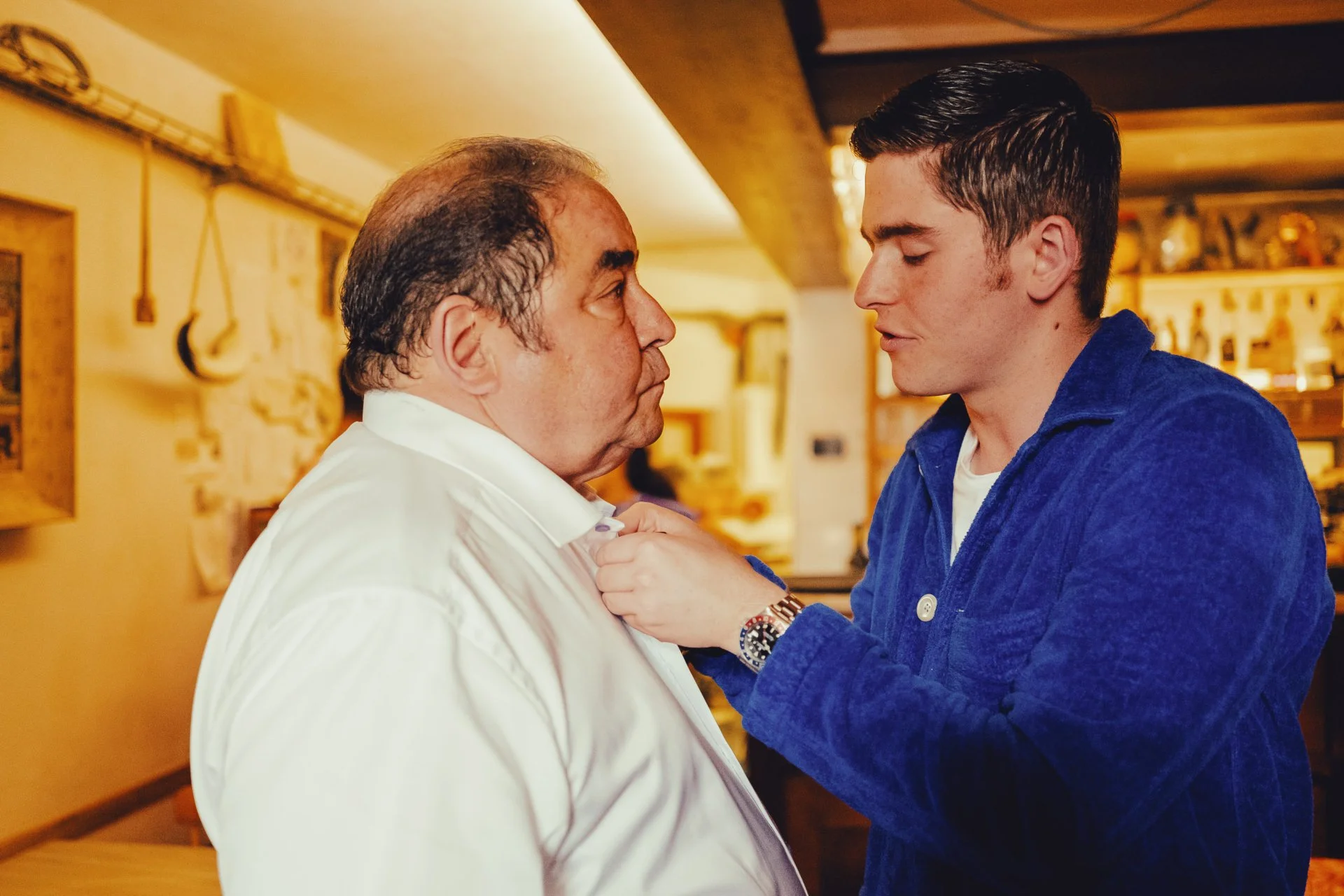
In preparation for their new Portuguese inspired restaurant, opening spring 2024 in New Orleans, chef Emeril Lagasse and his son E.J. embarked on a trip to Lisbon, because “You have to understand the Portuguese culture to understand the food,” asserts Emeril. “We’re portuguese,” E.J. adds. “I go by E.J., but we’re both Emerils. He’s the third Emeril, I’m the fourth. That’s why we’re calling the restaurant 34.”
PHOTOGRAPHS BY MATILDE VIEGAS
Foundational Flavors
E.J.: Presa pork is a suckling pig. They take the bit off the suckling pig near the belly; then it's pressed. The skin is so crispy. You could hit it with a spoon, and I think it would shatter — it's like glass.
Emeril: Every restaurant has its own version of presa pork as well as their own version of clams, which are very simple: made with coriander, Portuguese olive oil, garlic, chilies. Everybody has their version of gambas (shrimp), either spicy or not spicy.
The Portuguese are also known for being incredible bakers; their flour and wheat are different from ours. We always get a sample of a white bread, a cornbread — not American cornbread, like a real, rustic cornbread. And always some sort of cultured bread. Also, their butter is rich and creamy — anchovy butter is pretty popular. There are a lot of different flavored butters: smoked sea salt, and piri-piri, which is their hot sauce.
In terms of wine, Portuguese wines are different from American wines. Their chardonnays are not very oaky. I think they use a lot of stainless steel, so they have clean flavors. The wines from the Douro Valley, particularly the reds, are some of my favorites. I think it's the elevation. The Douro Valley is very hilly with a lot of clay. It tends to get cool in the evening, but the clay gets warm during the daytime, so it keeps the vines neutral, warm, and very lush. You can taste the fruit in these red wines, the earthiness, the soil.
E.J.: Then when you think about Azorean wines, you're getting a lot of sea — oceanic flavors.
Taberna da Rua das Flores
Emeril: This restaurant doesn't take reservations. You have to wait outside. It looks like an old dining room with no more than 18 seats. Nothing really matches. I think most people drink their wine out of water glasses.
E.J.: It's been mentioned in probably every modern Portuguese cookbook or tourist guide. It's rustic. We ordered the whole menu.
Emeril: The menu changes every day. About six years ago, we went there and had this white marlin soup. I'll never forget it. So we're going to do an interpretation of that at 34, but with swordfish instead of marlin so we don't have the sheriffs coming after us. (You can't serve white marlin in North America.)
E.J.: There were tons of arugula, beans, saffron, olive oil, and vinaigrette. It's called demi setting, where you dehydrate the fish and then marinate it in olive oil, like a conserva.
Emeril: The end result was a bowl of deliciousness.
Time Out Market
Emeril: The majority of the market is pop-up local restaurants — or secondary locations, not necessarily doing the same thing that they're doing at their original locations. In the center, there is a wine bar, a beer bar, and an Aperol spritz bar.
E.J.: It's 32,000 square feet. There are food and wine stores and jamón - stands. Every great chef in Lisbon or around Portugal has their own food stall. We recommend a buddy system: Have somebody stay at the table and then send people out to get food. Go midday. Don't eat breakfast. Maybe don't eat dinner the night before.


Tapisco
Emeril: It's like an upscale cafe. There's one long bar with seats and one long banquette with small tables.
E.J.: Open kitchen, copper hood. Berkel, the jamón meat slicer, is right there. They're known for vermouths and a selection of gin and tonics. The service is remarkable. The music is great.
Sea Me
Emeril: This restaurant has two levels: the top level and more of a family table. And a tiny sushi bar. They probably had 40 different types of shellfish and fish on display over ice. The server picked out a fish, went into the kitchen and prepared it. It was so delicious, served with just rice and some green vegetables. The oysters were incredible. A few people had a couple of pieces of sushi that were very unique. Again, simple, high-quality ingredients. It's an incredible lunch spot.
Bairro do Avillez
Emeril: This is three concepts in one. In the front, they have a take-out counter with hams hanging, casual, like a cafe. In the back is the full-on restaurant. We loved the grouper. The black rice was great. The octopus tartare was incredible. And clams, again, of course.
E.J.: And there was a really cool speakeasy beyond that, through a bookcase.
The Ivens and the Four Seasons Hotel Ritz Lisbon
E.J.: I've stayed at the Ivens maybe five times now. I think it's the coolest hotel in Lisbon. There's a lot of African art and cool prints. All the bellmen are in safari attire. And it's next door to Belcanto and Alma, so within walking distance of two Michelin-star restaurants.
Emeril: My group ended up at the Four Seasons Ritz. During Covid, they did a full-on renovation of the hotel. It's stunning. Killer bar. Sometimes they have a little sushi bar. There's a great rooftop where the gym is. You can see the ocean.
E.J.: And they have a stunning new 1-Michelin-star restaurant called Cura. It's exceptional.
Emeril: I think they might have deserved or will soon be getting two stars - they have a very talented chef who was delightful: Pedro. He was fantastic.
A Packing Tip
Emeril: If you're planning on going to Lisbon, you have to bring comfortable shoes because the cobblestones will kill you. I also bring sport coats with me to be respectful in restaurants. But for the most part, Lisbon is pretty casual.