COVER STORY
PUBLISHED IN DOSSIER
Human Nature
In the Scottish countryside, Wildland proposes a farsighted conservation and hospitality project aimed at healing the land and its inhabitants.
PHOTOGRAPHS BY EMMA HARDY
I’VE TRIED VENISON BEFORE. But not like this. Soft and mild, kissed with a woody, almost mushroom funk. Blush on the inside, russet on the outside. To the unsuspecting, it might read as a curious beef.
Venison is interpreted across many dishes here at WildLand, one of the largest conservation and hospitality projects in the United Kingdom, spanning 220,000 acres of the Scottish countryside. The meat results from the organization’s efforts to control the region’s overpopulated deer that overgraze the land. The name WildLand reflects the organization’s goal: to rewild vast tracts of Scotland’s rural spaces, from Loch Ness and the Cairngorms to Sutherland’s northern coastline. Mitigating the deer population is the tip of the iceberg. Founded in 2006 by Danish businessman and Scotland’s largest private landowner Anders Holch Povlsen, WildLand has planted 6.5 million new trees, rejuvenated 3,500 acres of peatland, and welcomed endangered species back into their natural homes. On the hospitality side, derelict structures have been reimagined as meticulous accommodations: hotels, lodges, and cottages where travelers can stay and learn about the conservation, in turn providing income streams to support WildLand’s mission.
One such accommodation is Killiehuntly Farmhouse, a stone manor turned four-room hotel in the Cairngorms. Here, I drizzle a brown, savory jus over that glistening slab of venison. For dessert? A glossy poached pear and hung yogurt studded with sweet, earthy crumble. This meal, and almost all to come, opens with fatty homemade butter and luscious bread — as bouncy and porous as the surrounding bog.
The food here hums with life, slain or picked in close proximity. It’s all prepared in the lodge’s open kitchen, which flows into communal dining spaces and living rooms, accented with creamy shearling throws and pale wood. This Scandi-Scot style is seen in many of WildLand’s accommodations, created in partnership with Swiss designer Ruth Kramer, Povlsen’s longtime collaborator.
“The concept of communal family-style dining — starting as strangers, leaving as friends — really resonated with the property,” shares Fiona McCulloch, her sapphire eyes fringed by inky lashes under curly, black bangs. McCulloch is general manager of the Aldourie Castle Estate, another WildLand property (more on that soon). Scottish hospitality is known for dark wood and heavy tartan motifs, which the clean lines of the WildLand properties cut through like a stream of fresh water. “That design and aesthetic, at the time, was very much unrivaled in the Scottish markets,” confirms McCulloch. “That’s what led me to the property initially; I’d never seen anything like this in Scotland.”
From my room’s downy, low-profile bed, a pendant lamp emitting the softest glow, I watch the greenery outside blur into a hazy violet as dusk falls. In the shower, signature bath amenities exhale the land’s botanicals: lavender, rose geranium, and tea tree. Underfoot, original pine planks lay unvarnished, soft and worn as wool.
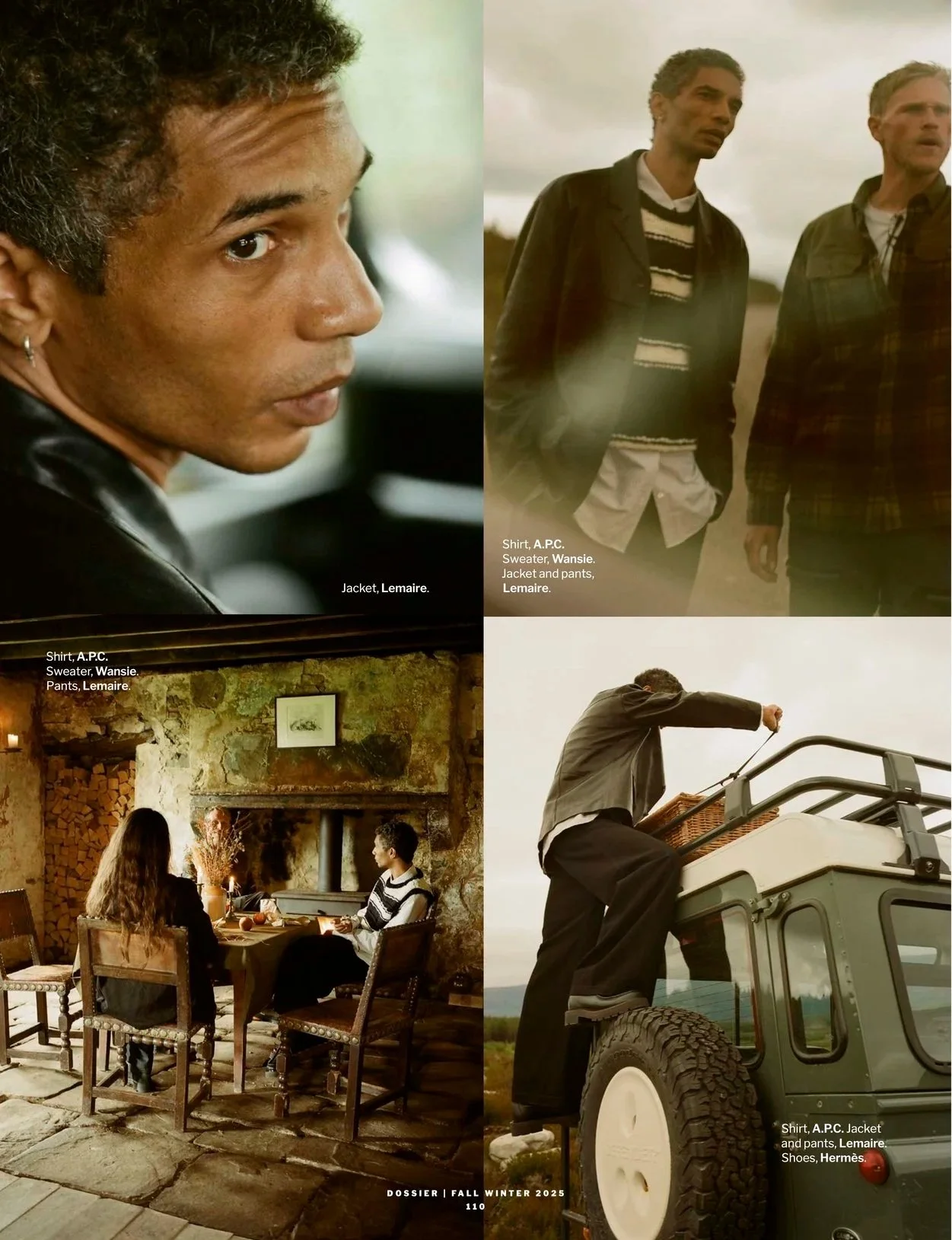
Come morning, activities manager Grant Shorten greets me in the kitchen, sunny walls jittering with the sizzle of venison sausage. Lanky, with a bright, open face, his skin pinkens under that blinding northern sunlight near licking our scalps. We cover great swaths of the property in his Land Rover, passing orange Highland cows with thick Dolly Parton bangs and hills quilted with fluffy trees or bog patches. The sky throws many weather patterns at once: ethereal haze, sunlight piercing through in golden beams, soft rain droplets. Heather bleeds purple across the ground, and tree varieties — blackthorn, willow, birch, and rowan — rise at various heights, crucial for undergrowth. Historically, commercial trees were planted all at once. Over time, dense canopies formed at the tops, blocking sunlight and stunting undergrowth: a wood’s essential carpeting of shrubs, small trees, vines, bugs, and scampering animals. Thinning those commercial blocks and planting young trees is, thus, essential to WildLand’s agenda; a diverse forest is a healthy one.
Looking at a bald area of land, Shorten details what will happen when new trees are planted: species migration. Commercial farming occurred in blocks, with trees for lumber planted in neat squares with little around them. A squirrel in one block would never run across open land to another block. It wants to stay within a woodland corridor. “Part of this vision is to connect habitats through these corridors by planting 6.5 million trees between two parallel glens,” Shorten explains. WildLand also removed around 62 miles of fencing to open up migrational patterns for larger animals, encouraging them to move freely.
Indeed, new life is everywhere. But so, too, is death. Replanting is the spine of WildLand, but allowing what’s passed to stay put is also part of a healthy ecosystem: an old granny pine, twisted and bleached like bone, is left for insect inhabitation; a rotting, knocked-over tree invites endangered birds to nest safely in its roots. Most striking is WildLand’s 200-year vision. This is the timeline the organization is working off to bring these lands back to how they once were. Which is to say: Upon completion, everyone here will be long gone.
“These cyclists?” Shorten says, as he points at two bikers. “They’re not our guests but have rights to roam.” (The public has a legal right to use public or private open-access land for recreation in all of the U.K.) “And that’s quite cool because they fall in love with the land. They might bring their kids, and their kids might bring their kids. And when we are all dead, it’s they who will fight for this beautiful landscape.”
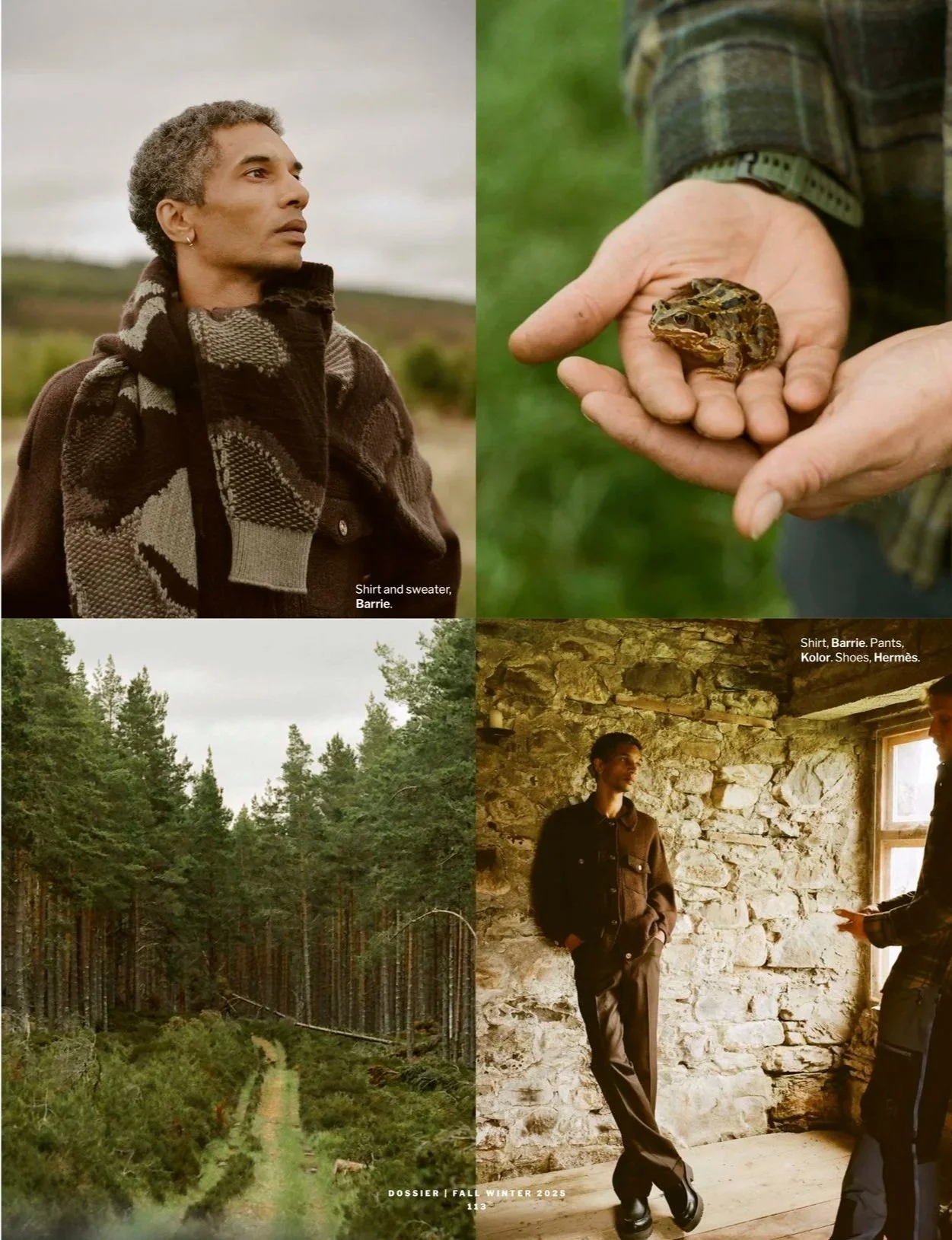
We stare down at the bog, juicy underfoot. It is made of something increasingly buzzy in today’s climate crises: peat. “Peat is sexy dirt,” clarifies Shorten. It’s excellent for carbon sequestration, pulling the element out of the atmosphere through the peat’s flora cover. When trapped within the wet earth, it preserves the matter — turning the dirt into a sort of fossil. “Peat can develop up to a millimeter [3.28 feet] a year. We’ve got areas of 4 meters [~13 feet] of peat. That could be 4,000 years of peat development. Because it’s anaerobic [without oxygen] and nothing decays, you see fully preserved root systems in the peat from a thousand odd years ago.” But this waterlogged carbon capture also poses a risk: If the bog dries up, exposing big areas of peat, methane (a greenhouse gas) is released. Restoring the peatland through rewetting and revegetating is a huge WildLand focus, via specific lichens and mosses that lock water retention into the soil. Shorten grabs a clump of sphagnum moss from the ground and squeezes. Out pours a waterfall; this varietal holds up to 20 times its weight in fluid.
Farther west, Aldourie Castle is WildLand’s new crown jewel — a baronial estate on the southern shores of Loch Ness. Near the castle lies The Dores Inn, a historic pub on the loch’s most famed beach, which the organization recently purchased. Renovating the pub, of course, means halting service, so WildLand opened food trucks in its stead. Beneath a tented canopy, locals tuck into warm flatbread wraps stuffed with fluffy fried fish or venison salami, briny and toothsome; homemade dippings, such as hot sauce sweetened with rhubarb and gooseberries; freshly churned ice cream; and pints of local beer.
The castle itself looks like a fan of coral under the sea. At 300 years old, it’s the only habitable castle on Loch Ness, redesigned two years ago by Anne Holch Povlsen (Anders’ wife) in partnership with London design group Jamb. Surrounding Aldourie are 500 acres of gardens, wildflower meadows, and ancient woodland. Inside, interiors mirror the landscape’s mellow hues: sage green and dusty rose. At the property’s edge, the inky waters of Loch Ness glint silver like chain mail. The seven cottages on Aldourie’s grounds live within that same Scandi-Scot design vernacular, with sweet little lamps glowing from their corners, crackling fireplaces and flickering candles, peachy walls, wildflower clusters on tables, burnished gold accents gleaming off gilded mirrors, and pillows so plush they’re like bellies bursting through button downs.
Lunch is served in the Laird’s Room at the castle, a handsome space marked by moss-colored walls and a mounted buffalo skull. A great fire rages within the stone fireplace as the team ushers in a flurry of dishes: barbecued mackerel quick-cured with sugar and salt, drizzled with Aldourie’s signature hot sauce and fringed by shaved fennel; asparagus dusted in parmesan shavings; and that bouncy bread. A distinct airiness runs through it all. Plating is loose, bountiful, unpretentious. Flatware feels earthy and soft. In the countenance of the team, as well, lies a distinct lightness of being.
Haydn Mortimore, head chef at Aldourie, sums it up well with his three S’s motto: “It’s gotta be simple; it’s gotta be sustainable; it’s gotta be sexy.” He backs the ethos even when challenged by guests — something he views positively in how it starts a dialogue around food and conservation’s interconnectedness. “I am quite strict,” he states. “In the winter, you won’t get berries.”
He speaks animatedly on WildLand’s work reimagining humble venison. Traditionally, the animals coming through a restaurant’s door were unsavory stags. Overhung, they’d produce strong (read: gamy) flavors. By picking the best animals for eating and taking a lighter touch to their hang, WildLand’s venison elevates the category. They’re even making charcuterie.
The misunderstood venison feels like a microcosm of Scottish cuisine, which for many brings to mind fried, beige food. “What we’ve got up here in Scotland is by far better than what they have in England and other places,” says Mortimore. “And that’s coming from an Englishman!” (Mortimore hails from Hampshire). “We have amazing berries, orchards — wild food we can harvest from the sea, the coastline. The shellfish is incredible.” Collaborating with local crofters (small producers, historically from multigenerational farming families) is another point of pride. “Some of the producers up here produce some of the most amazing things in the world,” he expounds. “So it’s about letting them shine as well.”
On a walk through the gardens with head gardener Elliott Forsyth, I pass peonies, tight and round as snowballs, and roses that smell like lemons. Forsyth has been with the team for the past five years, overseeing horticulture across Aldourie’s landscaping. Created by landscape designer Tom Stuart-Smith, the gardens are a mix of formal and naturalistic design. Think classic royal garden mixed with Piet Oudolf-y stretches of hardy perennials and grasses. Bees hum, and each section feels not so much like a distinct division but rather like undulating waves of growth: shrubs rattling in the wind like rushing water.
There’s also a small cemetery on the grounds. To enter, you must pass under a pergola. On the pergola’s inner wall, Forsyth opens two unassuming doors to reveal an enormous triptych. The central bas-relief reveals an angel cradling a tiny child. Above it, an inscription reads: In loving memory of Charles Edward — Dear child of Edward and Edith Fraser Tytler — Died Oct 7 1886 aged three years. “Most people miss this,” Forsyth murmurs before gently closing the doors. The castle’s most notable past custodians, the Fraser Tytlers, lived here from 1776 until the mid-20th century. One hundred and thirty-three years later, the castle’s current owners, Anders and Anne Holch Povlsen, also tragically lost three of their children in the 2019 Sri Lanka terrorist bombings. They came here, to the Scottish Highlands, to heal.
“We’ve tried to employ people with good values,” Forsyth says of the individuals behind this enormous project. “Values like care, inclusiveness, loyalty, kindness, respect — respect for each other and how we relate to each other. That can’t really be managed. You can try to encourage an environment where these are values, but, really, people have to come with them. Because all those values are freely given, they can’t be taken.”